Custom Coloring Books: How to Create, Print, and Order Your Own
 YourBookPress
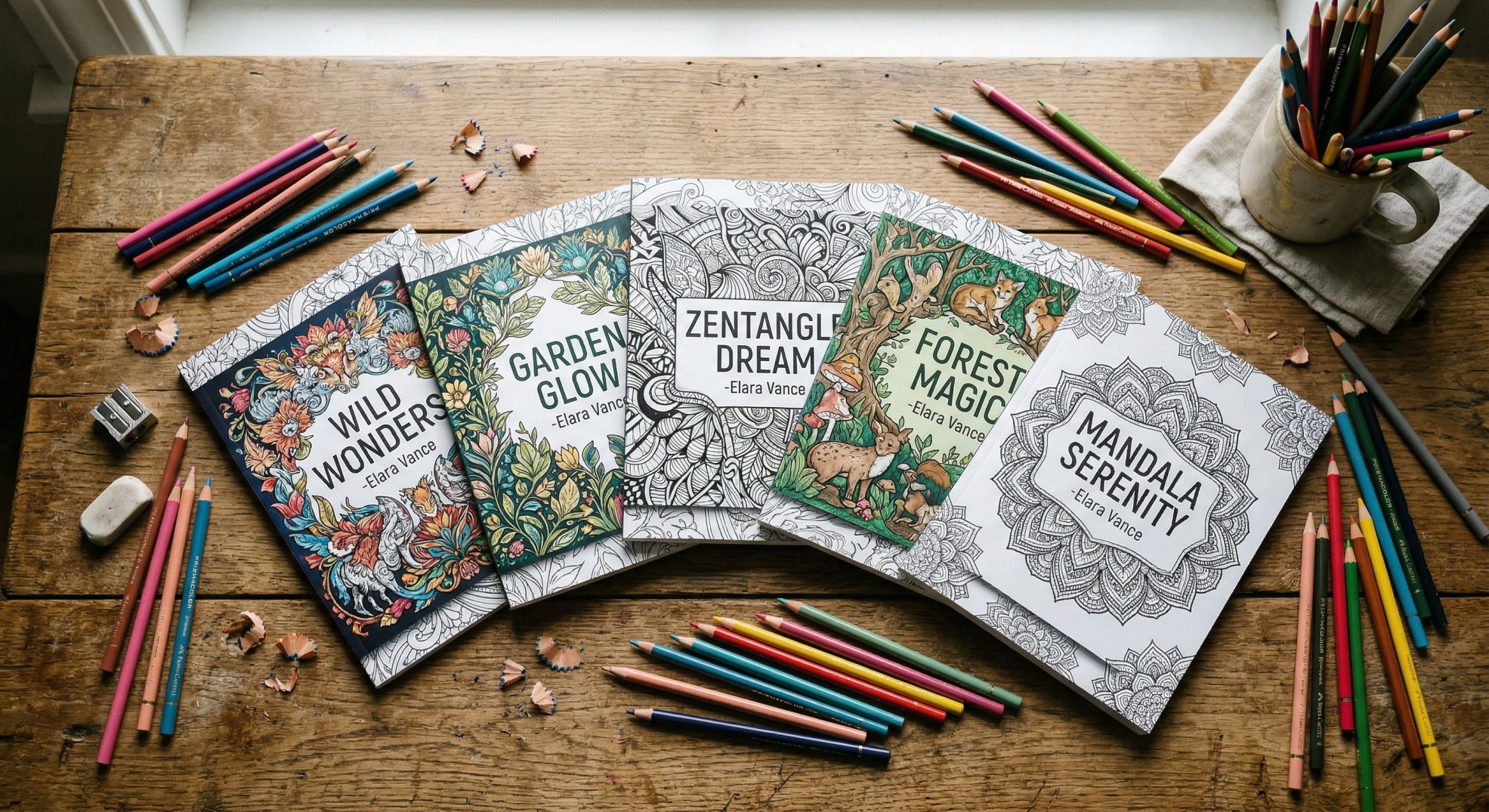
The demand for personalized and niche coloring books has grown steadily across the United States, and for good reason. A custom coloring book is more than just pages to fill in - it's a branding tool, a keepsake, a teaching aid, and a creative outlet, all rolled into one.
This guide covers everything you need to know: how to plan your content, prepare your artwork, choose the right printing specifications, and order professionally printed copies - whether you need one book or ten thousand.
Why Custom Coloring Books Are Worth Creating
Off-the-shelf coloring books serve a general audience. A custom coloring book serves your audience - with content, branding, and design choices you control completely.
Here's why individuals and organizations across the U.S. are choosing to print coloring books with their own content:
- Personalization. A coloring book featuring a child's name, a family's pets, or a couple's wedding story creates an emotional connection no store-bought book can match.
- Brand visibility. A branded coloring book sits on a kitchen table or a waiting room coffee table for weeks. That's far more exposure than a business card or flyer.
- Educational impact. Teachers and nonprofits use customized coloring books to reinforce lessons - from fire safety to dental hygiene to environmental awareness.
- Revenue potential. Independent artists and self-publishers sell original coloring books through Amazon, Etsy, and their own websites, often with strong margins.
If you've been thinking about making a coloring book, the process is simpler, faster, and more affordable than most people expect.
Who Orders Custom Coloring Books?
Understanding the most common use cases can help you plan your own project more effectively.
Artists and Illustrators
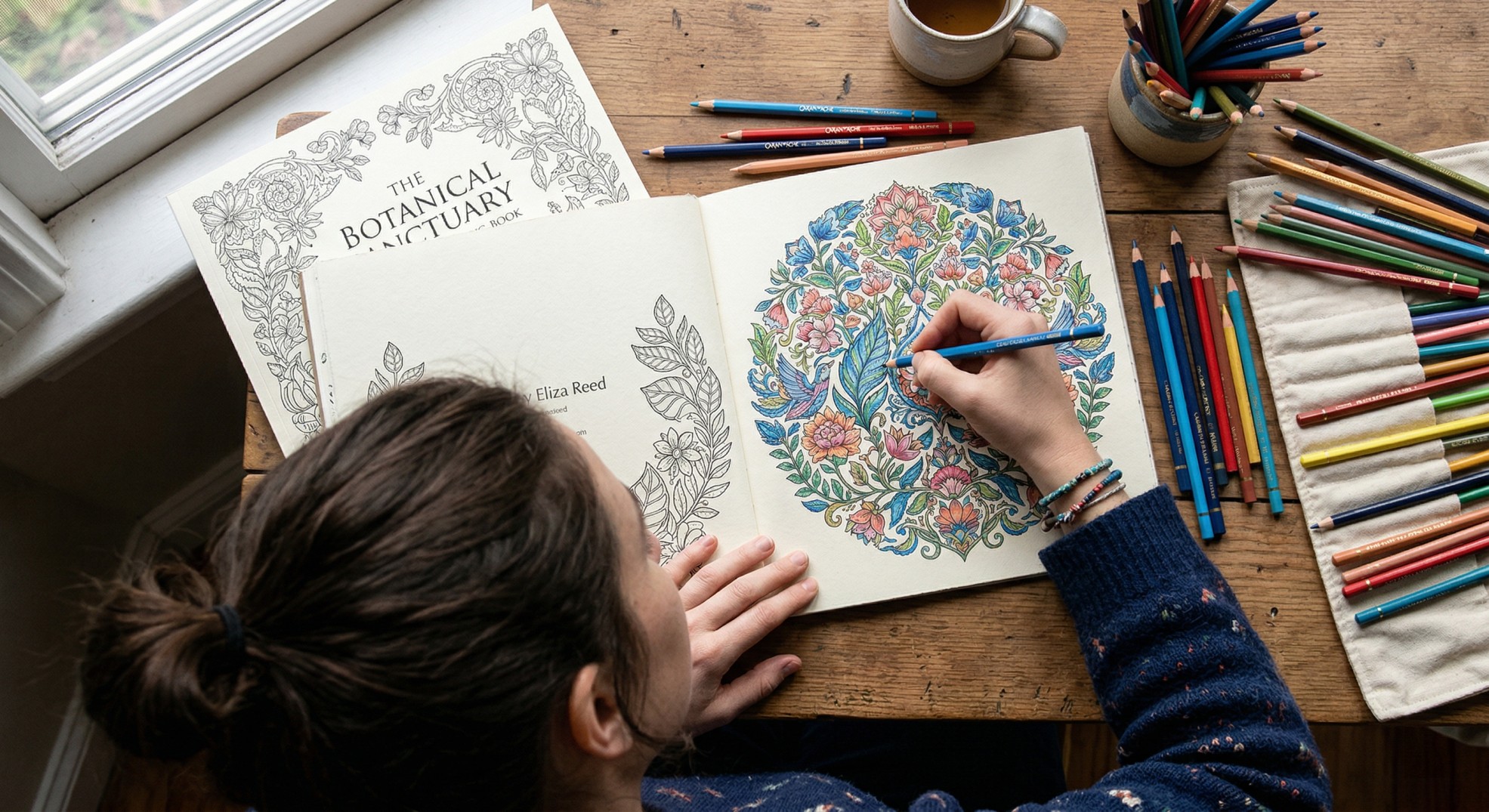
If you've built a portfolio of line art, mandalas, patterns, or character illustrations, turning that work into a printed coloring book is a natural next step. Many independent creators print custom coloring books in small batches to sell at art fairs, conventions, and online shops - or use print-on-demand to avoid holding inventory.
Small Businesses and Corporations
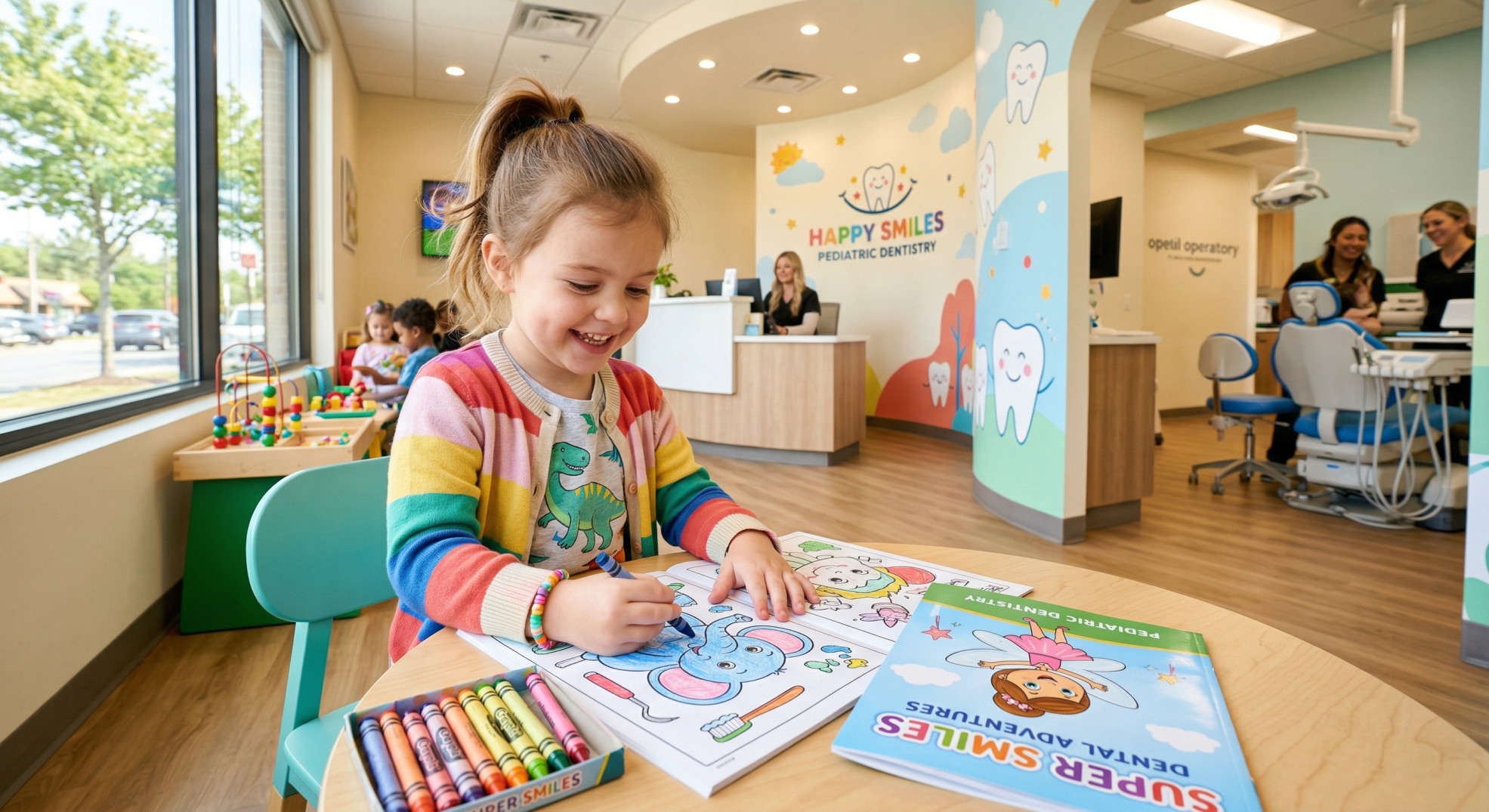
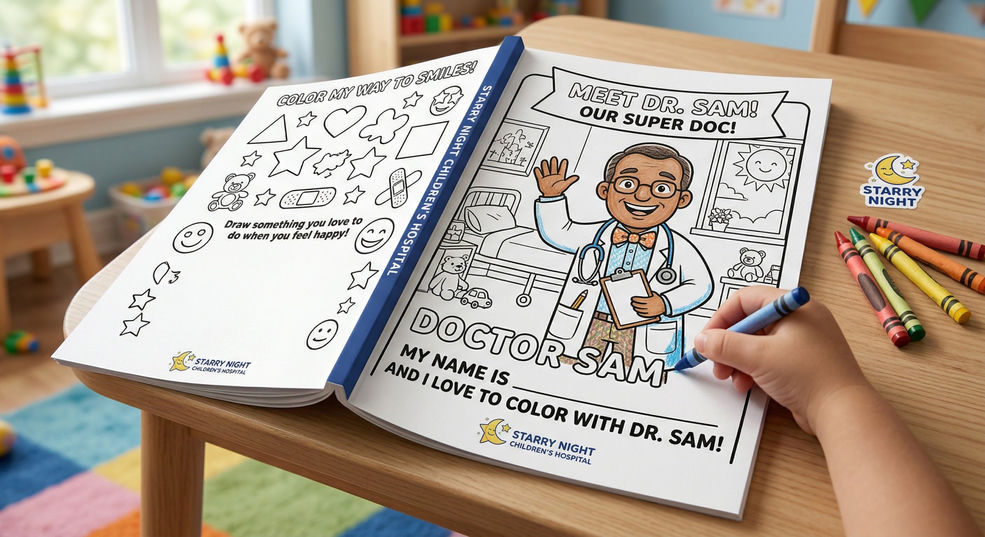
Custom coloring books for businesses are a proven marketing tool. Dental offices, veterinary clinics, real estate agencies, restaurants, and hospitals use branded coloring books to engage customers (especially families) while keeping their logo and messaging front and center. Unlike disposable ads, a coloring book has staying power - kids bring it home, and parents see your brand every time it's opened.
Parents and Gift-Givers
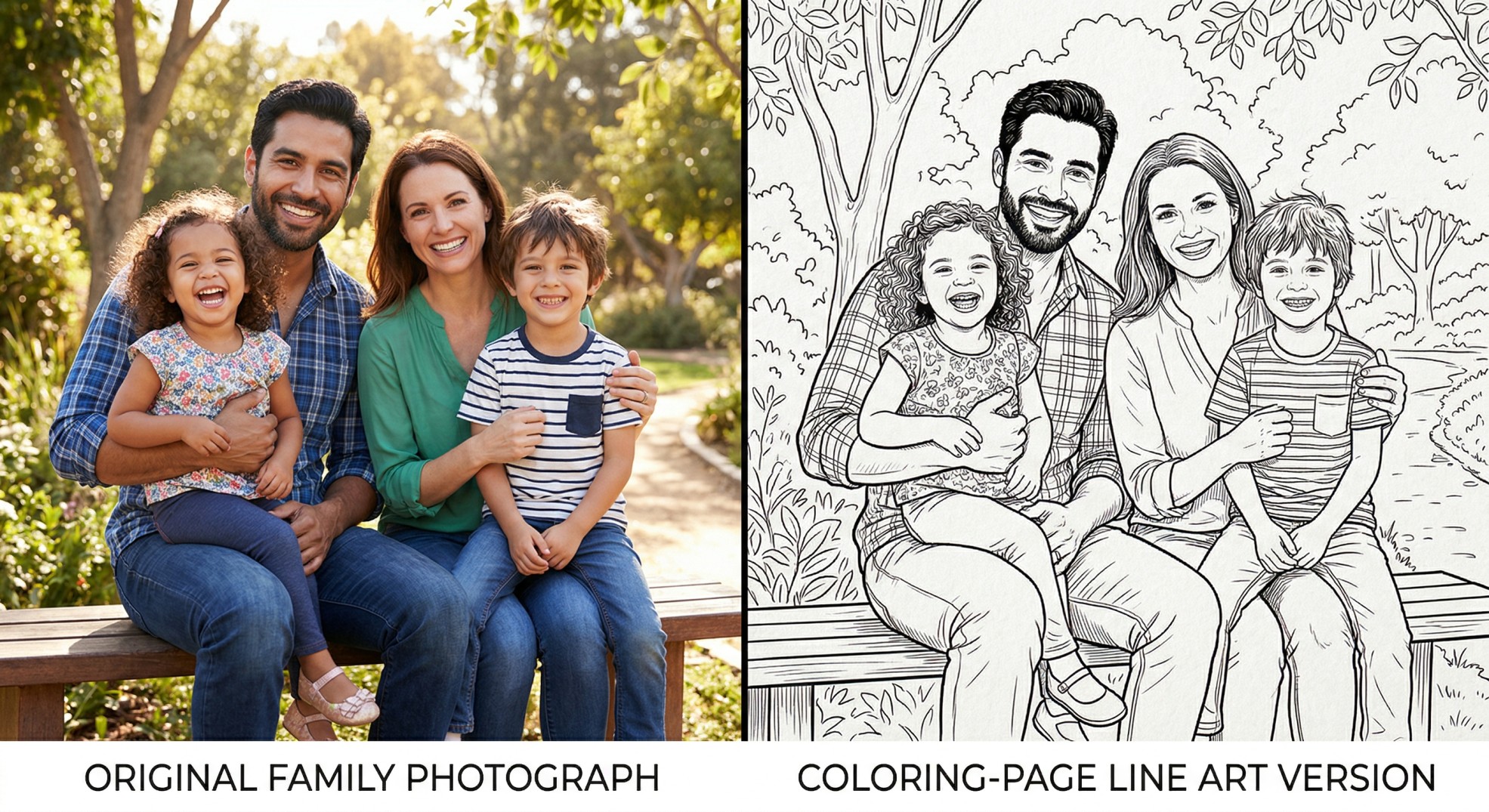
Custom coloring books from photos have become a popular gift category. You supply the photos - family portraits, vacation snapshots, a pet's greatest moments - and they're transformed into coloring-page-style line art. The result is a deeply personal keepsake that works for birthdays, holidays, grandparent gifts, and milestone celebrations.
Teachers, Schools, and Nonprofits
Educators create customized coloring books aligned with their curriculum or awareness campaigns. A nonprofit promoting ocean conservation might produce a marine life coloring book. A school might create an end-of-year memory book with illustrations based on each student's contributions.
Event Planners and Wedding Coordinators
Wedding coloring books keep young guests entertained during receptions. Event planners use custom activity books as branded takeaways at conferences, fundraisers, and community events.
How to Make a Custom Coloring Book: Step by Step
If you're wondering how to make a custom coloring book, the process breaks down into four main stages: planning, artwork, file preparation, and printing.
Step 1: Plan Your Content
Start with the big-picture decisions:
- • Who is the audience? Children, adults, or both? This determines the complexity of your illustrations.
- • How many pages? Most coloring books range from 24 to 100 pages. A 30- to 50-page book is a solid starting point.
- • Single-sided or double-sided? Single-sided printing prevents marker bleed-through and lets people tear out pages to frame them. Double-sided printing is more economical.
- • What's the theme? Specific themes perform better than generic ones - both for retail sales and for promotional use.
Planning well at this stage saves significant time and money later.
Step 2: Create or Source Your Artwork
This is where your custom coloring book comes to life. You have several options for getting illustrations:
Draw your own. If you're an artist, create your designs digitally or on paper and scan them at 300 DPI or higher. Use clean, bold outlines (2–4 pt line weight) in pure black on a white background.
Hire an illustrator. Professional coloring book illustrators typically charge $50–$200 per page, depending on complexity. For a 30-page book, budget $1,500–$6,000 for original artwork.
Use AI-generated line art. AI tools can generate coloring-page-style illustrations quickly and inexpensively. The quality varies, so expect to refine and clean up the output.
Convert photos to line art. If you want to create a custom coloring book from personal photographs, several services and software tools can convert photos into coloring-page-style outlines. This is the foundation of the popular custom coloring book from photos category.
Step 3: Prepare Print-Ready Files
Most professional printers - including YourBookPress - accept print-ready PDF files. Here's what to get right:
- • Resolution: 300 DPI minimum for all artwork.
- • Color mode: Black and white (grayscale) for interior pages. CMYK for full-color covers.
- • Trim size: Choose a standard book size. Popular options include 8.5" x 11" (Letter), 8.27" x 11.69" (A4), and 6" x 9" (Trade).
- • Margins: Keep all important content at least 0.25" from the trim edge. For spiral-bound books, add extra margin on the binding side.
- • Bleed: If any design elements extend to the edge of the page, add 0.125" bleed on all sides.
- • File format: Single PDF with all pages in sequential order.
Getting your files right the first time means fewer delays and no surprise charges. If you're unsure about file setup, most quality printers offer a proofing step before production begins.
Step 4: Choose Your Printing Specifications
This is where the physical characteristics of your book are decided. Each choice affects the look, feel, usability, and cost of your finished custom coloring book.
Choosing the Right Paper, Binding, and Cover
The printing specifications you select directly impact how your coloring book performs in the hands of the end user. People who regularly buy or use coloring books care about these details - especially paper quality.
Paper Type
For coloring books, uncoated paper is essential. Coated (glossy) paper causes crayons and colored pencils to smudge and skip. Uncoated stock absorbs pigment properly and gives the tactile feel colorists expect.
| Paper Weight | Best For |
|---|---|
| 70# Uncoated | Standard coloring books, crayons and colored pencils |
| 80# Uncoated | Mid-weight option, good all-around choice |
| 100# Uncoated | Premium books, light marker use, adult coloring books |
If your audience uses markers, gel pens, or watercolor pencils, go with 80# or heavier to reduce bleed-through.
Binding Options
Your binding choice affects both functionality and perceived quality.
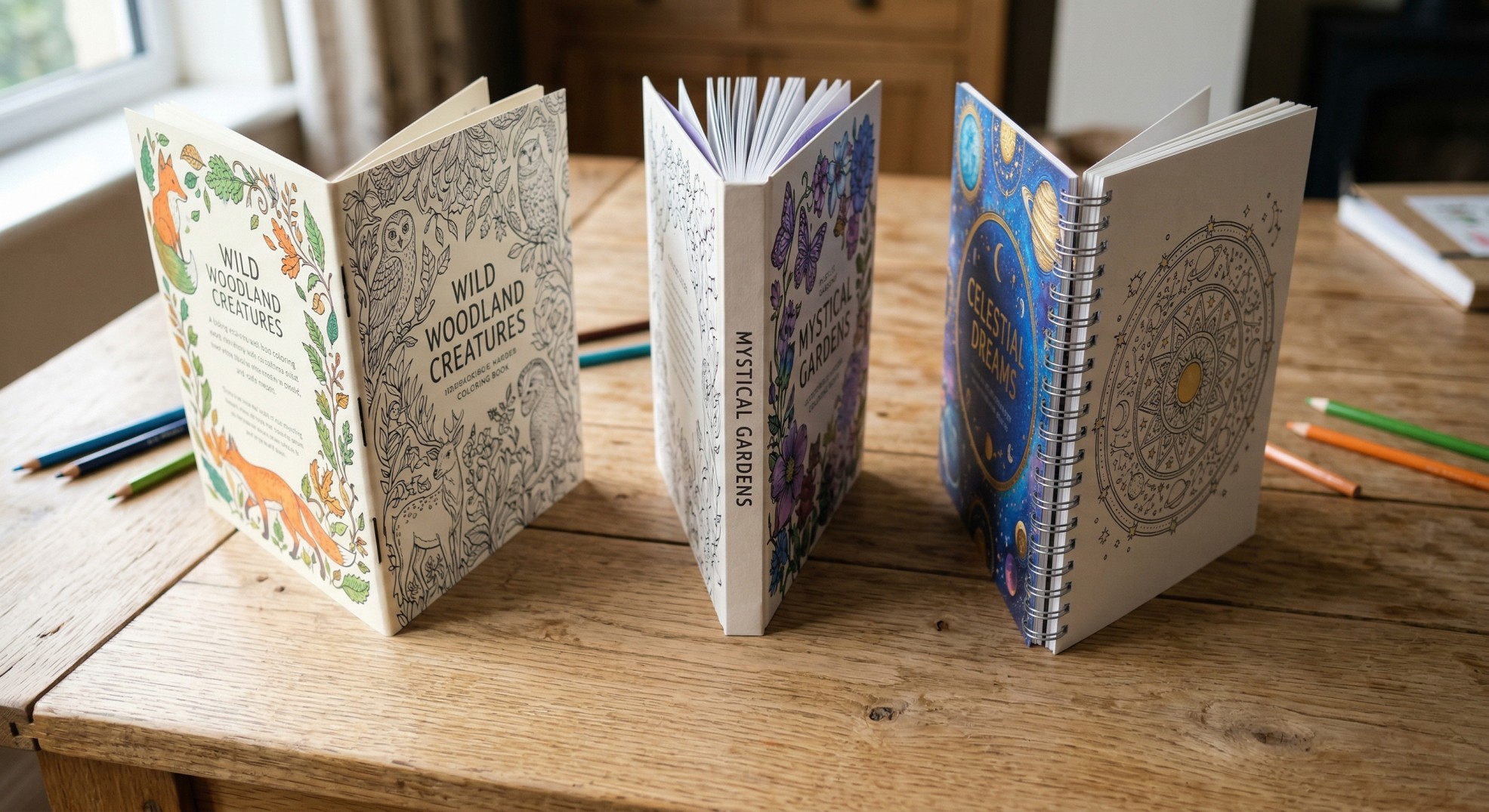
Saddle Stitch (Stapled) - Best for thinner books (up to about 64 pages). Affordable, fast to produce, and great for promotional coloring books and giveaways.
Perfect Bound - A flat, glued spine that gives your book a professional, retail-ready appearance. Works well for books with 40 pages or more and is the standard for bookstore distribution.
Spiral Bound - Allows the book to lay completely flat on a table and fold all the way back, which is a major advantage for coloring. A top choice for books that will see heavy, everyday use.
Hardcover - The premium option. Ideal for gift editions, collectible releases, and high-end customized coloring books where durability and presentation matter most.
Cover Finish
Your cover is printed in full color on heavier card stock. Choose between:
- • Matte lamination - Soft, sophisticated feel with reduced glare. Popular for adult coloring books and artistic editions.
- • Glossy lamination - Vibrant, eye-catching finish that makes colors pop. Works well for children's books and promotional materials.
Custom Coloring Books from Photos
One of the fastest-growing niches is custom coloring books from photos. The concept is simple: you provide personal photographs, and each one is converted into a clean line-art illustration ready for coloring.
Here's the typical process:
- 1 Select your photos. Choose 20–40 high-resolution images. Photos with clear subjects and good contrast convert best - think portraits, pets, landmarks, and group shots.
- 2 Convert to line art. Use software, an online service, or a professional illustrator to trace each photo into a black-and-white outline drawing.
- 3 Arrange into a book. Place each illustration on its own page. Add a title page, a dedication, and optional captions or prompts.
- 4 Upload and print. Send your completed PDF to a printer, choose your specs, and order.
A custom coloring book from photos makes an especially powerful gift because it's visually familiar to the recipient - they'll recognize the people, places, and moments on every page.
Custom Coloring Books for Businesses
If you're evaluating promotional products for your company, custom coloring books for businesses deserve serious consideration. Here's why they outperform most traditional giveaways:
Longer Shelf Life Than Typical Promotional Items
A branded pen or notepad gets used and discarded quickly. A coloring book stays in a household for weeks or months, generating repeated brand impressions every time a child opens it.
Engages the Entire Family
Coloring books appeal to both children and adults. A well-designed branded book entertains kids while putting your company's name, logo, and messaging in front of the parents who make purchasing decisions.
Versatile Across Industries
- • Healthcare: Hospitals and clinics use coloring books to ease anxiety in young patients and educate families about procedures.
- • Financial services: Banks and credit unions create books that teach kids about saving and money basics.
- • Real estate: Agents include neighborhood-themed coloring books in welcome packages for new homeowners with children.
- • Restaurants: Custom coloring placemats and activity books keep families coming back.
- • Tourism and hospitality: Hotels and visitor centers offer coloring books featuring local landmarks and attractions.
Cost-Effective at Scale
When you print coloring books in bulk, the per-unit cost drops significantly. A 32-page saddle-stitched promotional coloring book can cost as little as $1–$2 per copy at quantities of 500 or more - comparable to or less than many standard promotional items, with far greater impact.
How Much Does It Cost?
Pricing depends on four main factors: page count, book size, paper weight, and order quantity. Here's a general guide for a standard 8.5" x 11" coloring book with a full-color cover and black-and-white interior:
| Quantity | 32 Pages (Saddle Stitch) | 64 Pages (Perfect Bound) | 64 Pages (Spiral Bound) |
|---|---|---|---|
| 1 copy | $8 – $12 | $12 – $18 | $14 – $20 |
| 25 copies | $5 – $8 each | $7 – $11 each | $8 – $13 each |
| 100 copies | $3 – $5 each | $4 – $7 each | $5 – $8 each |
| 500 copies | $1.50 – $3 each | $2 – $4 each | $3 – $5 each |
| 1,000+ copies | $1 – $2 each | $1.50 – $3 each | $2 – $4 each |
Prices are estimates. Actual pricing varies by printer, paper selection, and additional options like cover lamination.
The most cost-effective approach for most projects: start by ordering a single proof copy to verify quality, then place your full order once you're satisfied with the result.
How to Make Custom Coloring Books That Sell
If you're planning to sell your coloring book - whether on Amazon, Etsy, at craft fairs, or through your own website - these strategies will help your book stand out in a crowded market.
Choose a Specific Niche
Generic themes like “animals” or “flowers” face enormous competition. Narrow your focus. “Desert Southwest Cacti and Succulents for Adult Colorists” or “Construction Vehicles for Kids Ages 3–6” will attract a more targeted (and more motivated) buyer.
Invest in Quality Illustrations
The quality of your line art is the single biggest factor in reviews and repeat sales. Clean, consistent, well-composed illustrations with appropriate complexity for your target age group are non-negotiable.
Use Premium Paper
Serious coloring enthusiasts - especially adults - read reviews and care about paper quality. Using 80# uncoated paper or heavier signals that your book is a quality product, not a cheap novelty. This one decision can be the difference between four-star and five-star reviews.
Design a Compelling Cover
Your cover is your primary sales tool online. Show a completed (colored-in) version of one of the interior illustrations to help buyers visualize the finished result. Include your title prominently and keep the design clean and professional.
Include Value-Adds
Consider adding color guides, fun facts, journal prompts, or perforated pages for easy tear-out. Small extras increase perceived value and give buyers a reason to choose your book over competitors.
Test Before You Launch
Order a proof copy. Color in it yourself using different media - crayons, colored pencils, markers, gel pens. Check for bleed-through, margin issues, and line weight problems. Fix everything before your first customer sees the book.
Tools and Resources
If you're ready to make your own coloring book, here are the tools that can help at each stage:
Design and Illustration Tools
- • Adobe Illustrator / Photoshop - Industry-standard tools for creating and refining line art.
- • Procreate (iPad) - Popular with illustrators for hand-drawn digital artwork.
- • Canva - User-friendly option for simple layouts and page arrangement.
- • Inkscape - Free, open-source vector graphics editor.
Photo-to-Line-Art Conversion
Several apps and online tools can convert photographs into coloring page outlines. Quality varies widely, so plan to do manual cleanup on the output. For the best results with a custom coloring book from photos, consider hiring a professional illustrator to refine AI- or software-generated conversions.
File Preparation
- • Export interior pages as a single PDF at 300 DPI, in grayscale or black-and-white.
- • Export your cover as a separate PDF in CMYK color mode.
- • Double-check your trim size, margins, and bleed settings before uploading.
How to Order Your Custom Coloring Book
Wondering how to get a coloring book printed once the artwork is finished? The ordering process with a quality coloring book printer is straightforward:
- 1 Upload your print-ready PDF. Interior and cover files go up in minutes.
- 2 Select your specifications. Choose your trim size, page count, paper type, binding, and cover finish.
- 3 Review your proof. Approve a digital proof to confirm everything looks correct before printing begins.
- 4 Place your order. Select your quantity - from a single copy to thousands.
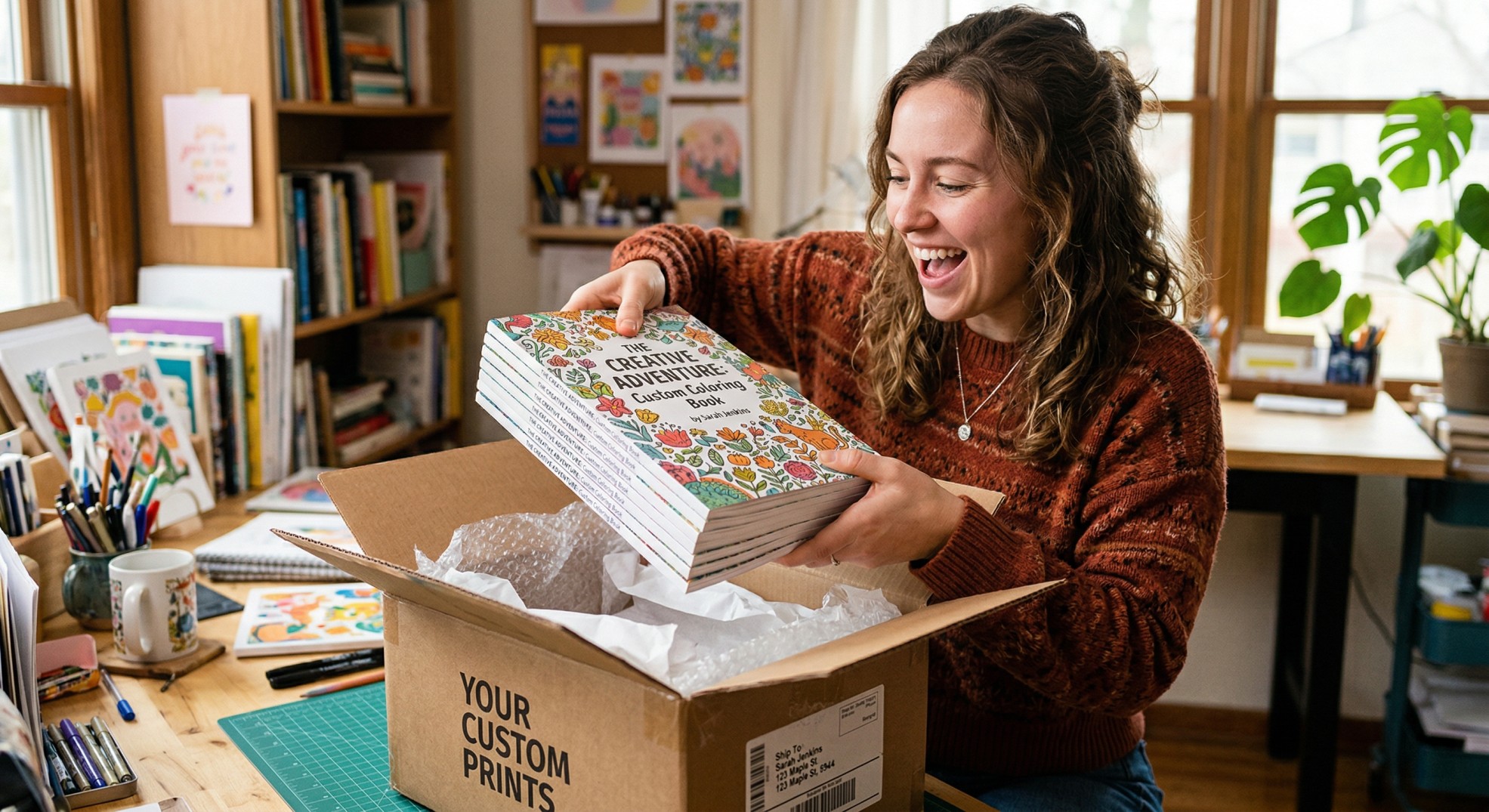
- 5 Receive your books. Production typically takes five to seven business days, followed by shipping.
No creative vision is too niche, and no order is too small. Whether you need one personalized copy or a bulk run of branded custom coloring books for businesses, the process is designed to be fast, transparent, and reliable.
Frequently Asked Questions
What is the minimum order for custom coloring books?
Many modern printers, including print-on-demand services, have no minimum order requirement. You can order a single copy to review before committing to a larger run.
What file format do I need to print coloring books?
Print-ready PDF files are the standard. Interior pages should be 300 DPI in grayscale or black-and-white. Covers should be in CMYK color mode.
Can I make a custom coloring book from my own photos?
Yes. Custom coloring books from photos are created by converting photographs into line-art illustrations. You can use software tools, online conversion services, or hire an illustrator for the best quality.
How long does it take to print custom coloring books?
Typical production time is five to seven business days after proof approval. Shipping time depends on your location and selected shipping method.
What paper is best for coloring books?
Uncoated paper in the 70# to 100# range is ideal. It absorbs color from crayons, pencils, and markers without smudging or excessive bleed-through.
How do I create a custom coloring book for my business?
Start by identifying your brand messaging and target audience. Design or commission illustrations that incorporate your branding, prepare print-ready files, and order through a printer that offers custom coloring book printing with the specs you need.
Start Your Custom Coloring Book Project Today
You have the idea. You have the audience. The tools and printing technology to bring custom coloring books to life have never been more accessible or affordable.
Whether you're learning how to make custom coloring books for the first time or you're a seasoned creator ready to print at scale, the path forward is the same: finalize your artwork, prepare your files, choose your specifications, and place your order.
The result is a product people hold in their hands, spend time with, and remember - which is more than most printed materials can claim.
Get Started - Print Your Coloring Book